













Key features
Four things that make bank reconciliation slow, and how LedgerMatch handles each one.
One deposit, many sales
Card processors pay out in batches, so a weekend of trading can arrive as a single Monday credit. Done by hand, this means adding up sales until the total happens to match.
- Grouped automatically: sales that funded together are matched to the one deposit that paid for them
- Still itemized: open any deposit and see every sale inside it, with its own date and amount.
- Weekends handled: a Friday to Sunday run landing on Monday is treated as normal, not as a problem.
When the deposit is smaller than the sale
A fee comes off the top. A refund is netted out of the same payout. The deposit is short, the sale was real, and nothing is actually wrong. It still has to be explained.
- Fees matched to the payout: the processing cut is tied to the deposit it came out of, not left over at the bottom of the file.
- Refunds and chargebacks: a netted refund is tied back to its sale, and a chargeback is flagged as an item to book.
- Small differences clear themselves: rounding inside your tolerance clears automatically, anything larger waits for a person.
When the money never arrives

A deposit that is two days late and a deposit that is never coming look identical in a spreadsheet. One is nothing. The other is money you have lost.
- Late is not missing: a payout still inside the funding window sits quietly until it passes it.
- Missing is raised on its own: settled by the processor and never funded is flagged the day it crosses the line.
- Duplicates caught: when a bank posts the same payment twice, it is matched once and the copy is flagged for reversal.
When the auditor asks how it happened
An auditor rarely disputes your total. They ask who reconciled it, who approved it, and where a figure came from. That is the question a spreadsheet cannot answer months later.
- Every decision logged: each match, override and sign off carries a name and a timestamp.
- Every figure traceable: numbers trace back to the bank feed or the sales feed. The tool never writes a figure of its own.
- Reports in reading order: the package comes out the way an auditor works through it, with the source data attached.
What automated bank reconciliation does
Three things change once the matching runs on its own.

Connect once, then it runs on its own
Right now someone exports a report, opens a spreadsheet and lines up two columns by hand.
Your card batches and your bank deposits already exist as records. LedgerMatch reads both and applies the same rule to every line. Nothing gets typed twice, and there is nothing to assemble at month end.

You work the exceptions, not the whole month
Matching is not where the hours go. They go to the handful of lines that do not match, and to chasing the documents that would explain them.
LedgerMatch clears the matches on its own and hands you the short list. Each item comes with its cause and the document that would close it.

A number your auditor can re-run
A reconciliation that looks clean is not evidence that it is. A rounding difference, a forced total, a day that got skipped. None of it announces itself.
Automated matching reaches the same answer every time, on the same rule. Every figure traces back to the record it came from.
Why finance teams choose LedgerMatch
Faster, more accurate, and built to keep working as you grow.

Your bank reconciliation is done before you sit down to do it
LedgerMatch matches deposits against what you were owed as they arrive, so there is no month end pile waiting for you. The reconciliation is already finished. You are only reviewing it.
Three days of bank reconciliation becomes an hour of decisions
Every deposit that ties clears on its own. Your team never opens the bank statement to work down it line by line, because LedgerMatch hands them only the payments that did not match, each with its reason attached.

Nothing gets forced to balance
A person matching a thousand bank lines eventually rounds something, or nudges a figure until the column agrees. LedgerMatch matches on the amount, the date window and the reference together, and where the two sides genuinely differ it says so instead of closing the gap.

The deposit that never arrived, found this week instead of next quarter
A payout that settles and then never funds is invisible on a bank statement, because nothing is there to notice. LedgerMatch flags it the day it passes the funding window, while the processor still has the records and someone still remembers the batch.

Reconciliation that does not get harder as you grow
Manual reconciliation costs you more every time the business grows. Twice the deposits is twice the hours, and at some point that becomes a hire. LedgerMatch works the same at four hundred deposits a day as it does at ten, so growth stops adding to the month end.

Your accounting software does not change
LedgerMatch runs alongside whatever you already use. It reads your bank, does the matching, and hands you the result. Nothing is posted to your books and no money can be moved, so there is nothing to migrate, nothing to roll out, and nothing to undo.
How bank reconciliation works in LedgerMatch
Two sources in, four outcomes out, one package at the end.
Quick integration
Integrate via simple API
or SDK - no heavy infrastructure,
fast sandbox testing.
Real-time authentication
Every card payment triggers
3D Secure 2.0 (frictionless or challenge) before authorization.
Payment proceeds
More approvals, liability shift,
fully secure and compliant
transaction.
Security and compliance built into every bank connection
Enterprise-grade encryption for bank data
All bank and settlement data is encrypted in transit and at rest to prevent unauthorized access at every stage.
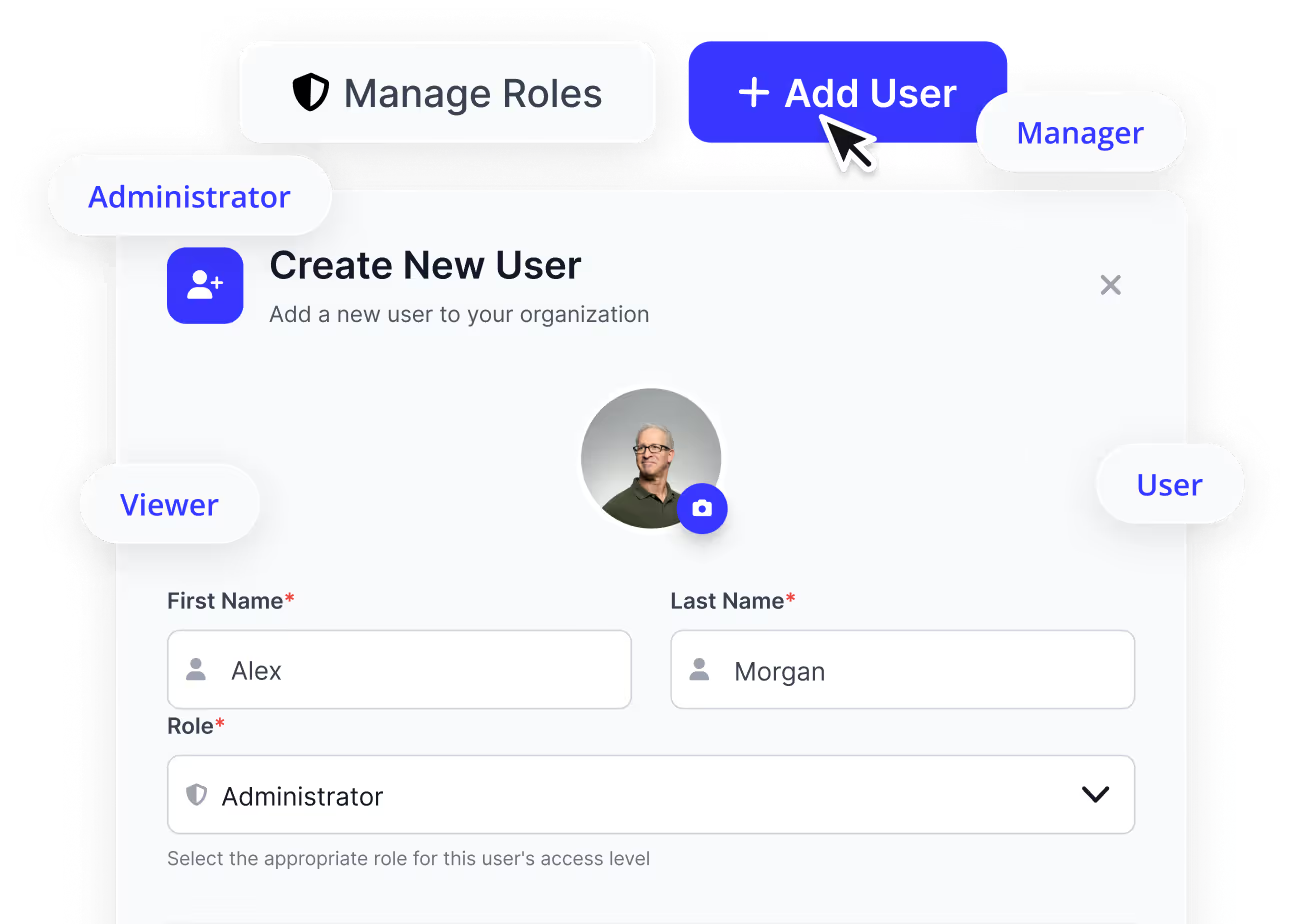
Role-based access to bank accounts
Granular permissions ensure users only see and manage the bank accounts they are authorized to access.
Full audit trails on every reconciliation
Every action is logged and traceable, providing full visibility for audits and internal reviews.

Secure infrastructure and account isolation
Isolated environments and secure infrastructure protect sensitive bank data across teams and entities.
Frequently asked questions
