













© Urenkoff 2025
Most people comparing these two products are somewhere between two problems. Either matching payments has become a volume problem that spreadsheets cannot keep up with, or the month-end close itself needs to be tighter, more consistent and easier to evidence. Those sound like the same problem from the outside. They are not, and the two products are built around different ones.
This article compares two pieces of reconciliation software and sets out what each one does, where they genuinely overlap, and the questions that usually decide it. Everything described here about BlackLine comes from BlackLine's own published product material, which is linked at the end so you can check any of it yourself.
Where each one fits
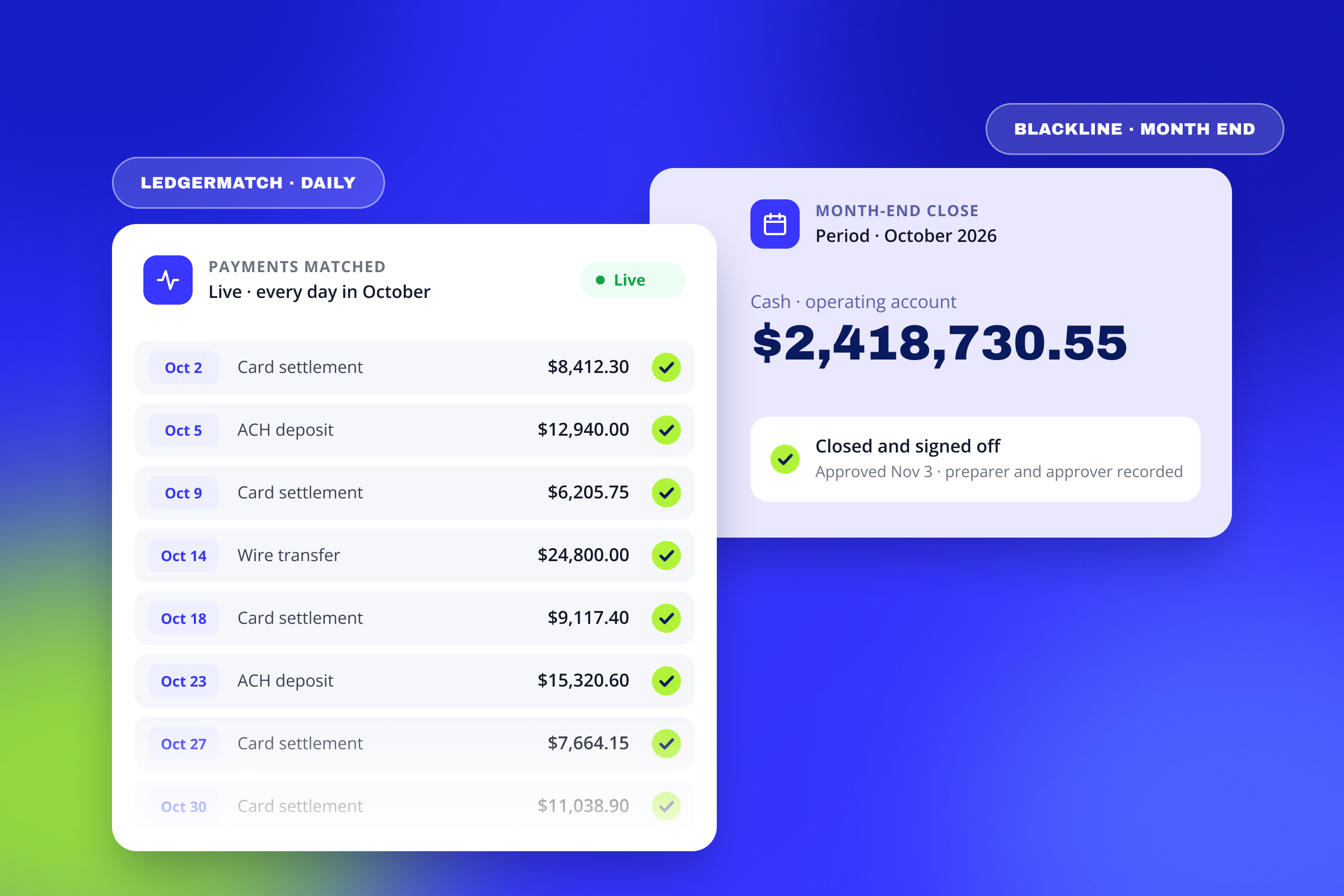
LedgerMatch, the reconciliation software built by Urenkoff, is a matching product. It concentrates on money coming in: payments, card settlements and deposits, matched against what actually arrived in the bank, with the exceptions passed to a person. If the problem you are solving is payment volume and the exceptions it produces, that focus is the reason to buy it.
BlackLine is a financial close platform. Transaction matching is one product within it, sitting alongside account reconciliations, journal entries, account analysis, consolidation and task management. If the problem you are solving is the close as a whole, including who prepared each reconciliation, who approved it, how accounts are certified and how all of that is evidenced across entities, that breadth is the reason to buy it.
Neither statement is a criticism of the other product. A close platform is supposed to cover the close. A matching tool is supposed to match. The question is which problem is currently costing you more.
What LedgerMatch does
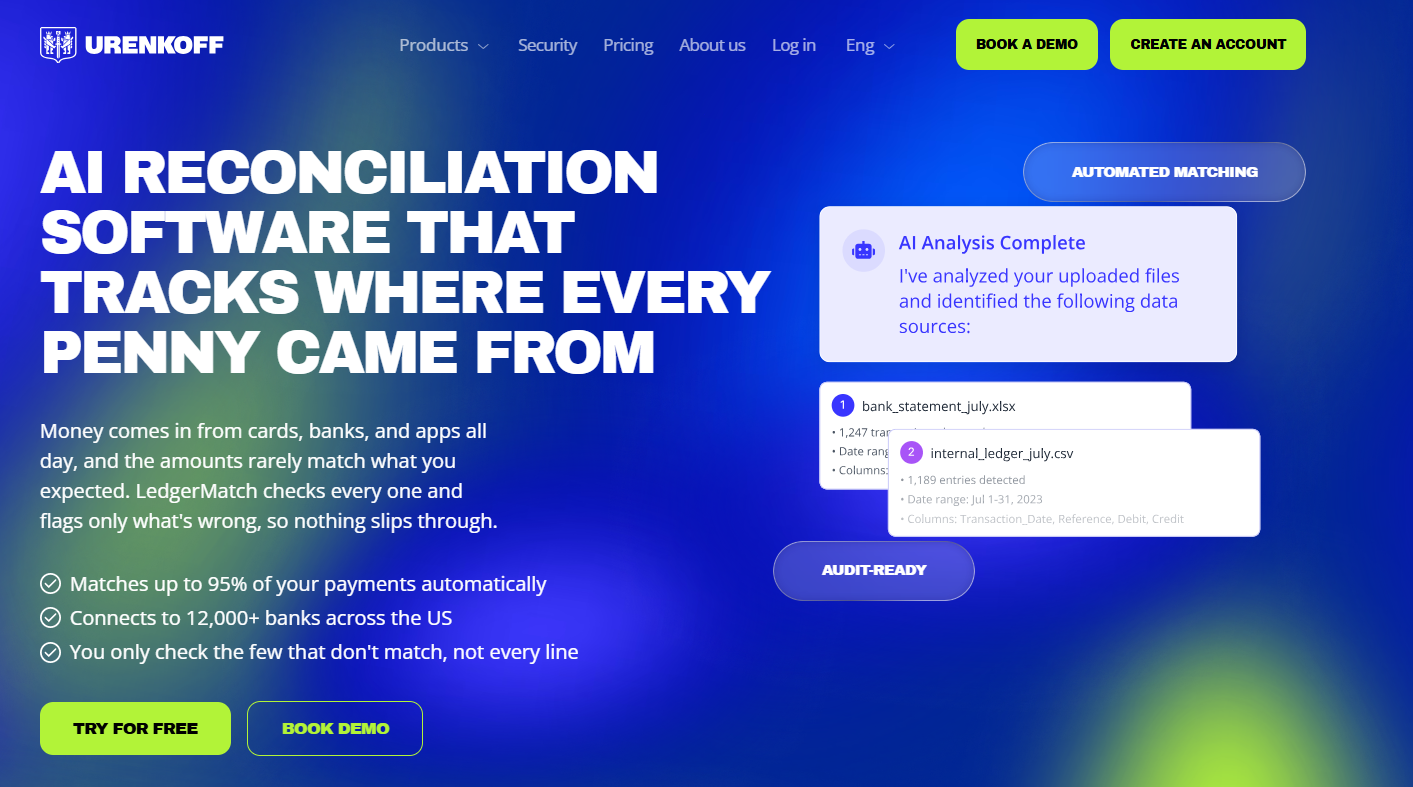
LedgerMatch, Urenkoff's reconciliation software, is built around one question: did the money you were owed actually arrive, and if some of it did not, which payments and why. It reads what your systems say you should have received and what the bank actually received, matches the two, and sends a person only the items that do not reconcile. Everything else closes without anyone touching it.
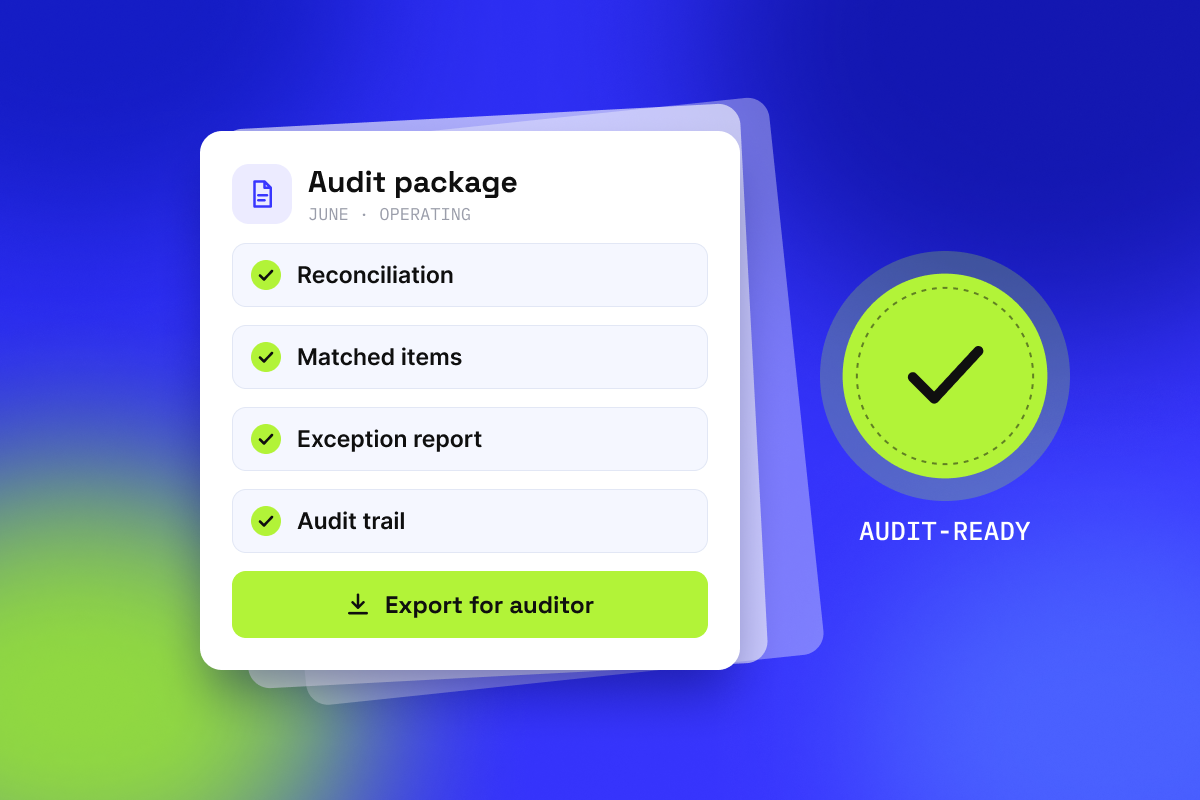
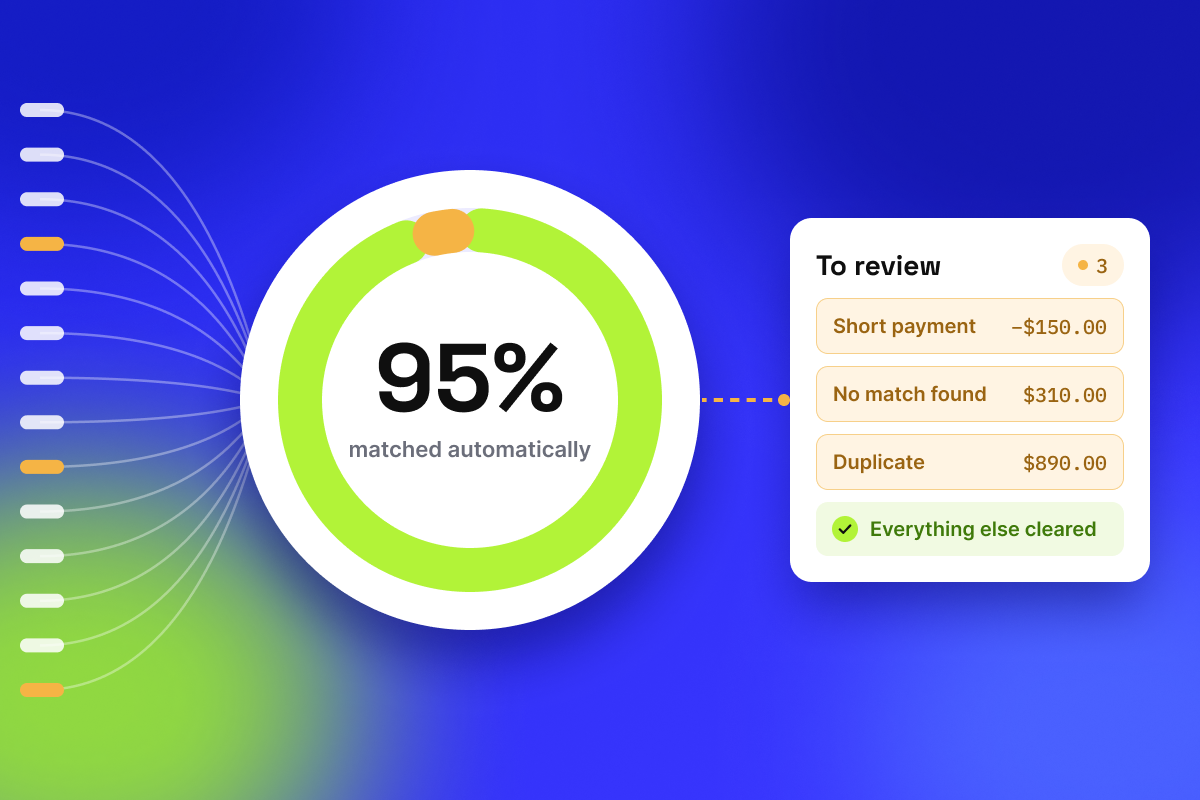
The detail that matters most to a finance team is how differences are treated. Fees, rounding and settlement timing are applied during matching rather than left behind as variances for somebody to investigate, so the exceptions that reach a person are the ones that are genuinely unexplained. Items that are ambiguous are deliberately left unmatched rather than force-matched, on the basis that a wrong match costs more later than an open one does now.
LedgerMatch is also clear about what it is not. It does not replace accounting software, it does not close anything without approval, and it does not post to your ledger. The result is an answer and an evidence trail, which your existing close then uses.
What BlackLine does

BlackLine approaches the same raw material from the other end. Its subject is the financial close as a whole: which accounts have been reconciled, to what standard, by whom, approved by whom, and whether all of that can be evidenced consistently across a group. Transaction matching sits inside that as one product among several.
Alongside Transaction Matching sit Account Reconciliations, Journal Entry, Account Analysis, Consolidation and Task Management, which is what makes it a close platform rather than a matching tool. BlackLine describes Transaction Matching as a way to "turn mountains of data into matched, verified transactions", and states that matching results can create journal entries and reconciling items on account reconciliations, which is what links the matching to the rest of the close.
That apparatus exists for a reason. BlackLine's own material points to publicly traded companies as a group for which configurable reviewer and approver procedures are best practice. For a finance function of that shape, the certification and workflow layer is the product rather than overhead around it.
Where the two genuinely overlap
If you read only the matching paragraph on each website, they sound similar, and that is fair. Both products:
- Automate transaction matching at high volume
- Apply rules you configure rather than fixed logic
- Surface exceptions instead of making a person review everything
- Keep an audit trail behind every matched item
- Are bought by teams trying to get out of spreadsheets
So the honest version of this comparison is not that one matches and the other does not. It is that the matching sits inside a different system in each case, and what surrounds the match is what you are really choosing between.
The six differences that decide it
1. What the product is scoped to. BlackLine covers the close end to end, with matching as one component. LedgerMatch covers matching money coming in, and expects your ledger and your close to stay where they are.
2. Where the matching sits. In BlackLine, a match can flow onward into journal entries and reconciling items inside the platform's own reconciliations. In LedgerMatch, matching produces a confirmed answer and an exception list, which your team then uses wherever your accounting already happens. Nothing is posted back.
3. What is being matched against. BlackLine's reconciliation material centres on ERP trial balances and subledgers imported through connectors. LedgerMatch centres on the money side: bank credits, card settlements and processor payouts, with the US bank coverage to read them directly.
4. Close governance. This is the clearest difference. Certification rules, decertification, segregation of duties and policy-worded reviewer procedures are substantial parts of what BlackLine offers. LedgerMatch records who reconciled and who approved, but it is not a close governance system and does not try to be one.
5. How you start. Connecting an account and seeing matched results is a short exercise in LedgerMatch, and you can run a free tier or a trial before speaking to anyone. Configuring a close platform to a company's templates, policies, certification thresholds and entity structure is a different kind of project, because those things have to be decided before they can be configured.
6. Pricing and commitment. LedgerMatch publishes its prices. BlackLine does not publish pricing on its website, which is normal for platform software sold into large finance functions, and means the conversation starts with a scoping call rather than a number.
Which difference matters to you
Side by side
Every row in this table is drawn from the two companies' own published material. Neither column is a scorecard. Several rows that look like a gap on one side are simply a description of what that product is for.
They are not mutually exclusive
It is worth saying that these two are not always a choice. Matching incoming payments against the bank and running a controlled month-end close are different jobs, and plenty of finance functions need both. A company already committed to a close platform may still have a payment matching problem it has not solved, and a company using a matching tool may later outgrow its close process and need something heavier around it.
If you are weighing them as alternatives, it is worth checking first whether you are actually comparing two answers to the same question.
Five questions that will decide it for you
- What is slow right now? Writing the reconciliation, or matching the transactions that go into it?
- What are you matching? General ledger accounts and subledgers, or payments, settlements and bank credits?
- Who has to sign off, and does the system have to enforce it? If an auditor expects enforced segregation of duties and certification, that requirement points one way.
- How many entities? One trading entity is a different problem from a consolidated group with intercompany balances.
- What is your timeline and your budget shape? Something running this month on a published price, or a platform scoped and configured to your close policy.
Answer those five honestly and the decision usually makes itself, which is a better outcome than a feature comparison.
What to ask on the call, whichever way you are leaning
The same five questions work on us and on anyone else you are evaluating, and the answers tell you more than a feature list.
- What exactly will this match, and what will still land on a person's desk?
- What does it connect to directly, and what will we have to upload ourselves?
- What has to be decided internally before configuration can start?
- What does the first ninety days look like, week by week, and who does the work?
- Can we run it against a period we have already closed, and compare both answers?
That last question is the one worth insisting on. Any vendor confident in its matching should be happy to be checked against a month you already know the answer to.
See it against your own numbers
The fastest way to settle any of this is to run a period you have already closed. Book a walkthrough and we will match a month your team has already reconciled, so you can compare what LedgerMatch says against the answer you reached yourself, before anything depends on it.


Become a Design Partner
Reconcile faster. Stay audit-ready
We're accepting a limited number of organizations for the inaugural cohort. No cost, 12 months, direct access to our team.
General
General
November 11, 2026
How to Audit a Bank Reconciliation
A bank reconciliation that balances proves almost nothing. This guide covers the full audit procedure, the manipulations it catches, and the red flags worth knowing.
General
General
November 11, 2026
How to Connect Your Business Bank Account for Automatic Reconciliation
Title Post for ES Version
Connecting your bank account directly is what makes daily reconciliation possible, instead of exporting a statement once a month. This guide covers what the connection actually gives a vendor, the six questions to ask before you authorise one, and how to test the result against a month you have already closed.
Post Summary for ES Version
General
General
November 11, 2026
How to Reconcile Accounts Receivable Without Forcing the Numbers
Accounts receivable reconciliation answers one question: does what customers owe you agree with the money that actually arrived. This guide covers the six-step process, the six differences that cause most of the work, and how to stop doing the matching by hand.